
Happy International Workers’ Day!
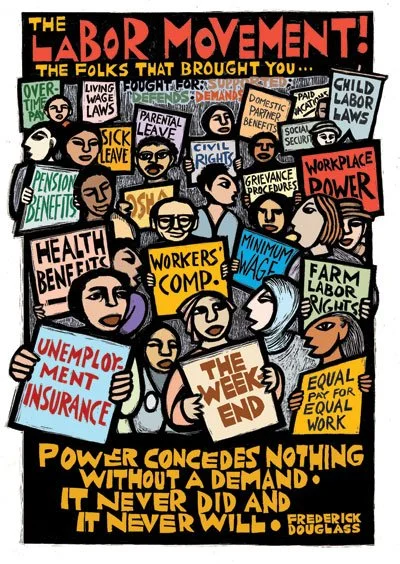
May 1st is International Workers’ Day, which holds historical significance and was chosen to commemorate an 1886 organizing effort to secure the 8 hour work week (read more here about the Haymarket Affair). The work of current advocates, including the fight for the Pregnant Workers Fairness Act (PWFA), rests on the shoulders of so many organizers in the history of the labor movement. On this important day, in order for us to dream for the future, we must understand where we came from and where we are.
The fight for PWFA was a long process, spanning almost a decade of advocacy efforts. Prior to this, one of the main protections for pregnant workers was the Pregnancy Discrimination Act (PDA), passed in 1978, which amended the Civil Rights act to include discrimination based on pregnancy as sex discrimination. Before the PDA, pregnant workers had no specific protections or ability to protect themselves from discrimination. The PDA prohibited employers from denying pregnant workers access to benefits in the workplace that other workers “not so affected but similar in their ability or inability to work” had access to.
Of course, this was not without its flaws. In the decades since, pregnant and postpartum workers continue to face issues in the workplace, such as little access to unpaid and paid leave and lack of an affirmative right to pregnancy and
breastfeeding accommodations. When taking into consideration things like socioeconomic status and race, there is an additional layer to this conversation. Black women have the highest infant mortality rate in the U.S. and according to the March of Dimes, Latina, Black, immigrant and low-income workers are more likely to work in labor intensive occupations. It became clear that in order to better support all pregnant workers, additional legislation was necessary.
Thus the Pregnant Workers Fairness Act was introduced.
“The PWFA requires a covered employer to provide a “reasonable accommodation” to a qualified employee’s or applicant’s known limitations related to, affected by, or arising out of pregnancy, childbirth, or related medical conditions, unless the accommodation will cause the employer an “undue hardship.”
– US Equal Employment Opportunity Commission
A coalition of organizations came together in 2012 and started an advocacy campaign to make the Pregnant Workers Fairness Act a reality. In their reflections on how they won this campaign, one organization shared that centering workers was a very successful strategy. Just like many other wins in the labor movement, this legislation passed because everyday workers shared their experiences. They exposed the ways they were being exploited and discriminated against and how detrimental the impacts were on their quality of work, their ability to build a stable life, and their ability to care for their families. After ten years of diligent work, the PWFA was passed in December 2022 and went into effect in June 2023. This is still fairly recent! Federal law has only protected the right to accommodations for pregnant and postpartum workers for approximately three years, though some states, including DC and VA, passed state law protections earlier.
In my role as DC Outreach Coordinator, I speak to people in the community who, after learning about what we do at First Shift, share how important our services are. They express how much they wished they had our support when they were trying to navigate securing job-protected leave or accommodations in the workplace as a pregnant or postpartum person. Ultimately, in the aftermath of important legislative wins, there’s still work to do in making workers aware of advancements, empowering them to understand their rights, and helping them feel confident in advocating for themselves. First Shift exists to do that work, in addition to providing the appropriate legal services when needed.
Pregnant and postpartum workers shouldn’t have to deal with the burden of prioritizing work over their health or their families. No worker should have to! Today, the fight continues on all levels for the labor movement. In Mayor Bowser’s FY27 budget proposal, there are potential cuts to the DC Paid Family Leave program (PFL) and co-enforcement grant programs through the DC Office of the Attorney General (OAG). DC PFL benefits support low income families and other workers that need to take time off for family, medical, parental, or prenatal leave. If you’re interested in learning more about how you can advocate for the DC PFL program to be fully restored, you can sign up here. Additionally, the OAG co-enforcement grant programs help fund crucial work that community organizations do to provide education to workers about their rights. Help us restore these grant programs by writing a letter to the DC council. This is yet another hurdle and in the spirit of International Workers’ Day, let’s commemorate and honor the legacy of the labor movement by pushing forward the fight for better conditions for all workers, everywhere.
By: Jennifer Saldana
DC Outreach Coordinator
References
https://www.theregreview.org/2025/07/08/wells-the-pregnant-workers-fairness-act-after-dobbs/
https://www.eeoc.gov/statutes/pregnancy-discrimination-act-1978
https://www.aclu.org/news/womens-rights/the-pregnant-workers-fairness-act-how-we-got-here
https://www.marchofdimes.org/our-work/policy-advocacy/pregnant-workers-fairness-act